


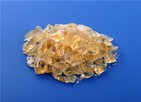

The performance of PCL
PCL is a hydrophobic, semi-crystalline polyester. Its crystallinity decreases with increasing molecular weight. PCL is a low melting point (59-64 ℃) polyester, and readily soluble in a variety of polar organic solvents with good solubility. The polymer exhibits biocompatibility, polymer blend compatibility, and controlled biodegradability. Compared to PLA, PGA, and other absorbable polymers, PCL degrades slowly (6–12 months in natural environments), making it ideal for long-term implantable devices.
The synthesis of PCL
Polycaprolactone is synthesized via ring-opening polymerization of the cyclic monomer ε-caprolactone. This synthesis process involves various mechanisms, and different methods influence the resulting copolymer's molecular weight, molecular weight distribution, end-group, and chemical structure. Currently, a commonly used polymerization method is coordination polymerization catalyzed by stannous octoate, where polycaprolactone is synthesized through ring-opening of ε-caprolactone by stannous octoate in solution or in a melt.
The application of PCL
First synthesized in the 1930s, PCL gained prominence as a biodegradable synthetic polymer. Due to its excellent biocompatibility and biodegradability, PCL has been widely used in the medical field. Applications include PCL microspheres for drug delivery, as well as medical devices such as sutures, wound dressings, fixation devices, and tissue engineering materials like biological scaffolds. In addition, PCL also has good shape memory and temperature control properties, and is widely used in the production and processing of drug carriers, plasticizers, biodegradable plastics, nanofiber spinning, and shaping materials.

The application of PCL: microspheres